Home / Insights / Builder or custom built
Wix, Squarespace or custom built: what actually changes
Published September 2026 · By Manon Vernay

Every website builder gives you the same thing: a large, clever machine that can build almost any website, sitting behind the four pages you actually made.
That machine has to load when someone visits you. All of it. Whether your page uses any of it or not.
First, the honest bit
Website builders are good, and a lot of businesses should use one. If you have a handful of pages, you quite enjoy fiddling with things yourself, and your customers find you through word of mouth or a shopfront rather than Google, a builder is a sensible answer. A Squarespace site that exists beats a custom site you keep meaning to commission.
Anyone who tells you builders are rubbish is selling you the alternative. What follows is what actually changes when you move away from one, so you can decide whether any of it matters to you.
What actually changes
How much has to load
A builder ships the machinery that makes its editor work, on every page, to every visitor. A hand built site contains only what your pages do. Nothing else is in there, because nothing else was put in there.
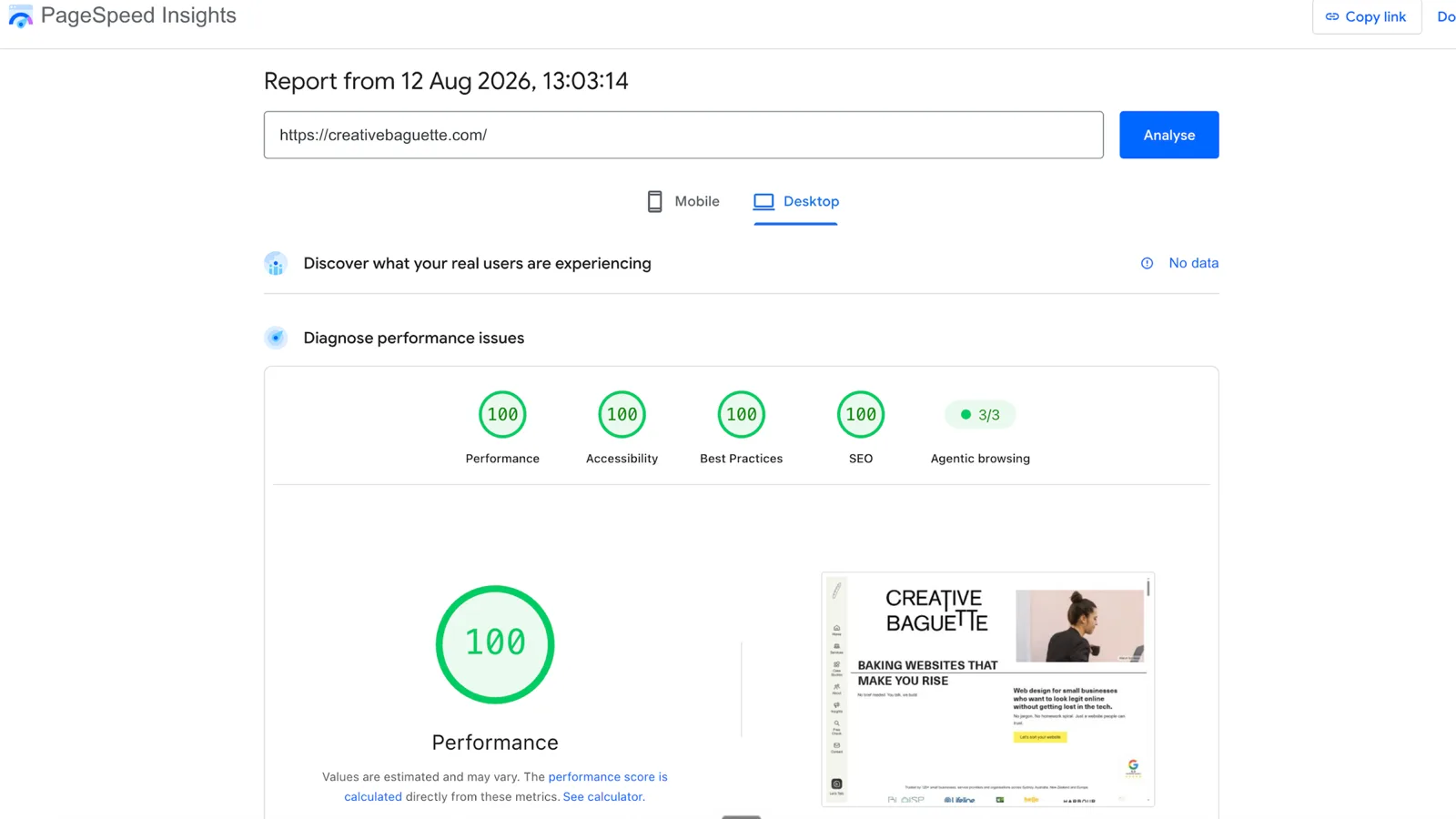
That difference shows up as loading time on a phone, on mobile data, which is where most of your visitors are. We wrote about how to test yours free in sixty seconds if you want to see where you stand before deciding anything.
How much can break
Builders and plug-ins update themselves. Usually that is fine. Occasionally an update changes something on your site that you did not ask to change, and you find out when a customer mentions it.
Fewer moving parts means fewer things that can move without asking you.
What you can be attacked through
Most small business sites are not targeted personally. They get caught by automated scans looking for a known weakness in a common plug-in. A site with no plug-ins and no login page has very little of that surface to offer.
What you own
This is the one people find out too late. On a builder you own your content and your domain name. You do not own the website, because it only exists inside that platform. Stop the subscription and the site stops with it. Moving to another provider is not a transfer, it is a rebuild.
None of that is a scandal. It is just the deal, and it is worth knowing which deal you are in before you have five years of blog posts sitting inside it.
What it costs over five years
The comparison people make is a builder subscription against a build fee, and on that maths the builder wins on day one every time.
The comparison worth making is across five years, with everything in it. The subscription, the paid template, the plug-ins that turned out not to be free, the premium plan you moved to when you needed one more feature, and the hours you spent doing it yourself instead of doing your actual work.
Sometimes the builder still wins. For a simple site that rarely changes, it often does. We have said so to people on the phone and lost the job, which is fine. What we have never seen is that comparison come out honestly when only one side of it is counted.
If you want the real numbers for the other side, we published what a website actually costs in Sydney, including the ongoing bits people forget.
Three questions that will decide it for you
Does anyone find you through Google? If your enquiries come from referrals and repeat customers, the technical side matters far less. If Google is your shopfront, how the site is built stops being a detail.
How often does it need to change? A menu that changes weekly wants a system you can get into. A services page that changes twice a year does not.
What happens if it breaks on a Friday? On a builder, that is your problem and their support queue. On a care plan, it is someone else’s problem. Whichever answer makes your shoulders drop is probably the right one for you.
There is no correct answer here
There is a correct answer for your business, and it depends on how you get customers, how much you want to be involved, and how long you plan to keep the thing.
What we would push back on is choosing by default. Most small business websites are on whatever platform was easiest the weekend they were started, and nobody has revisited that decision since. That is not a strategy, it is just momentum.