Home / Insights / Best Allied Health Website Designers
Best allied health website designers in Australia (2026)
Published July 2026 · By Manon Vernay

Yes, this is our list and yes, we are on it. So here is the deal: we state our criteria, we describe everyone fairly, and we tell you who we would send you to when we are not the right fit.
Allied-health-specific criteria: understands advertising rules for registered practitioners (no clinical testimonials — see our plain-English AHPRA guide) · booking-first design · portfolio with real practices in it · won't make your practice look like a tech startup.
The list
Creative Baguette (us) — websites for practices including Evolve Chiropractic, Village Pilates and Hypertension Australia. Landing pages from $700, most website projects between $1,900 and $3,800; we design within practitioner advertising rules from the first draft; the full approach is on our websites for allied health page. Best fit: solo and small practices that want warm, credible and bookable.
Practice Lab — practice-operations depth alongside design; publishes extensively on running an allied health practice. Good fit if you want operational consulting with the build.
Lollipop Creative — therapy-website specialty within a broader small business studio, Melbourne-based. Good fit for Melbourne therapists who want local.
Allied Health Website Designs — a dedicated allied-health-only shop, as the name suggests. Worth a look for comparison quotes.
Thrive Web (Gold Coast) — healthcare and medical design with a bigger-agency feel. Good fit for multi-practitioner clinics with larger budgets.
Who we would send you to
Multi-site clinic groups with procurement processes: a larger healthcare agency. Want practice-management consulting first, website second: Practice Lab.
The three questions that filter the list fastest
Whoever you shortlist, ask: "How do you handle testimonials for registered practitioners?" (the only acceptable answer involves the advertising rules unprompted), "Can I see a live practice site you built, on my phone?" (booking flow included), and "What happens to my site if I leave you?" (you should own it outright). The first question alone eliminates most generalist designers, which is the point: an allied health website built by someone who has never read the advertising guidelines is a compliance risk with nice fonts.
How allied health choosing differs from everyone else's
For most small businesses, picking a web designer is about taste, price and speed. For a registered practitioner there is a fourth axis that outranks the other three: does this designer already know your advertising obligations, or will you be teaching them? A beautiful site with a testimonial slider is a compliance problem you paid for. Ask every candidate what they know about advertising rules for registered practitioners before you ask about price, and listen for a specific answer, not "we can look into that".
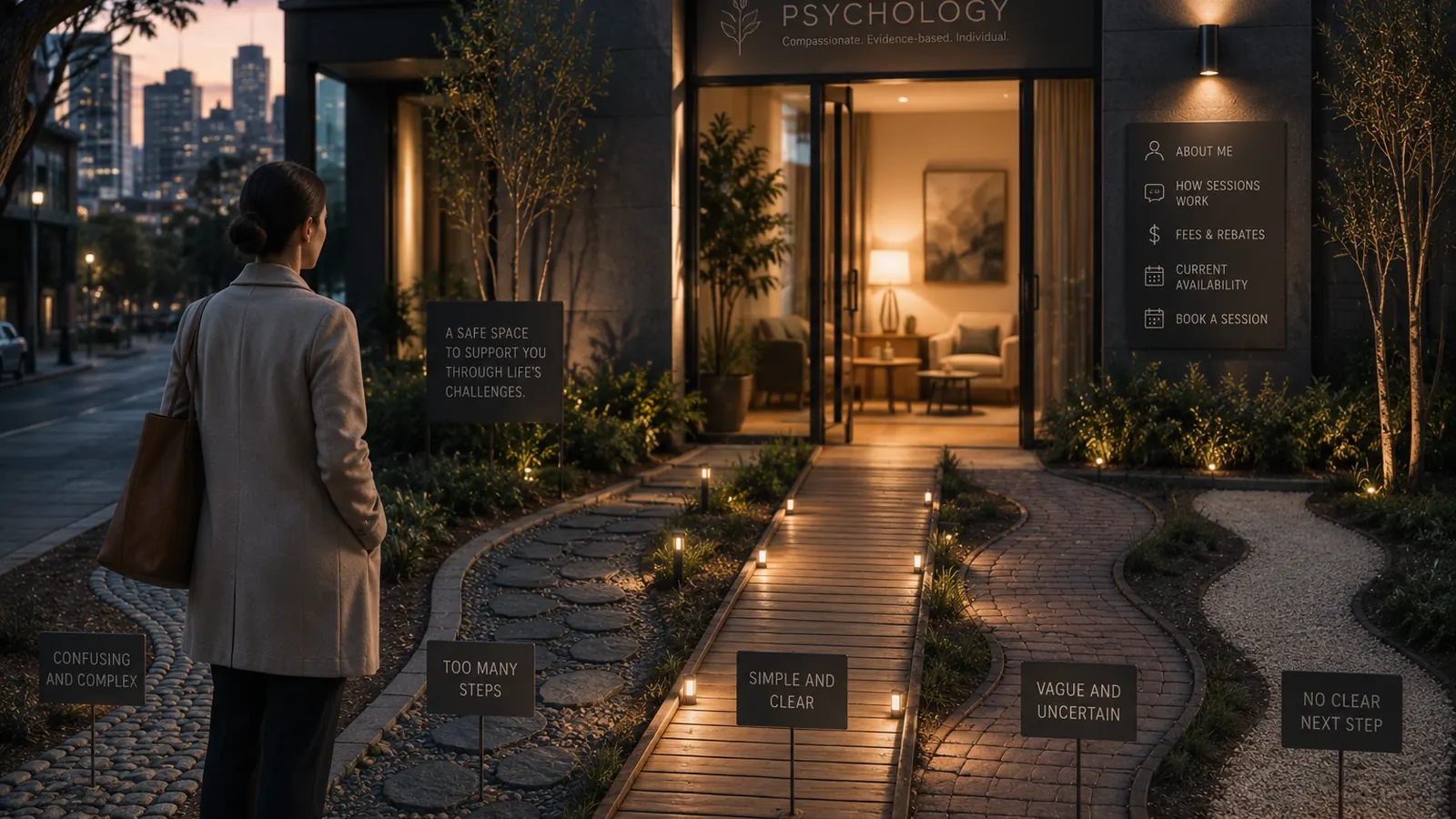
The second difference is the booking path. A tradie can convert with a phone number; a practice converts through online booking, which means the designer needs to integrate whatever runs your calendar (HealthEngine, Hotdoc, Halaxy, Cliniko or plain Calendly) so booking is one click from every page, not a buried Contact link. Portfolio check: click through to their past practice sites and count the clicks from homepage to a bookable time.
And the third: tone. Health websites fail in two opposite directions, the corporate-hospital look that feels cold, and the life-coach look that feels unqualified. The practices that convert sit in the middle: warm, personal, and visibly professional. Look for that register in a designer's past work, because you will inherit their instincts.